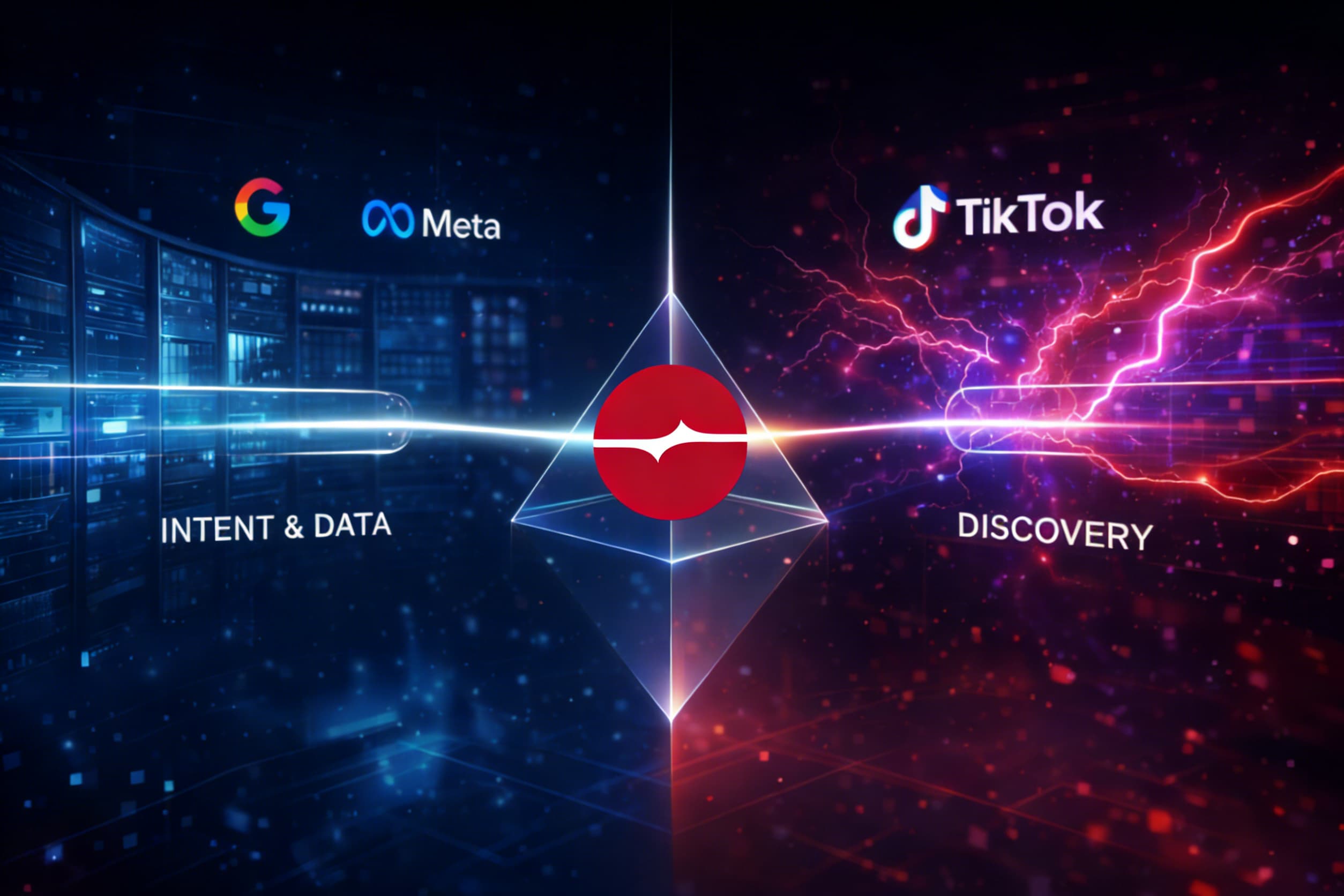
1. The 2026 Attribution War: A Three-Way Conflict
In the history of digital advertising, the line between “credit” and “contribution” has never been blurrier. By 2026, the marketing ecosystem has fragmented into three distinct sub-universes, each operating with its own logic:
- Google (The Guardian of Intent): Exists precisely when a user types a specific solution into a search bar. It is the final processing plant for “Intent.”
- Meta (The Social Fabric): Targets based on friends, family, and niche interests. It unearths latent desires within a user’s “Relationship” web.
- TikTok (The Epicenter of Attention): Bypasses both intent and relationships to force “Discovery” through pure algorithmic momentum.
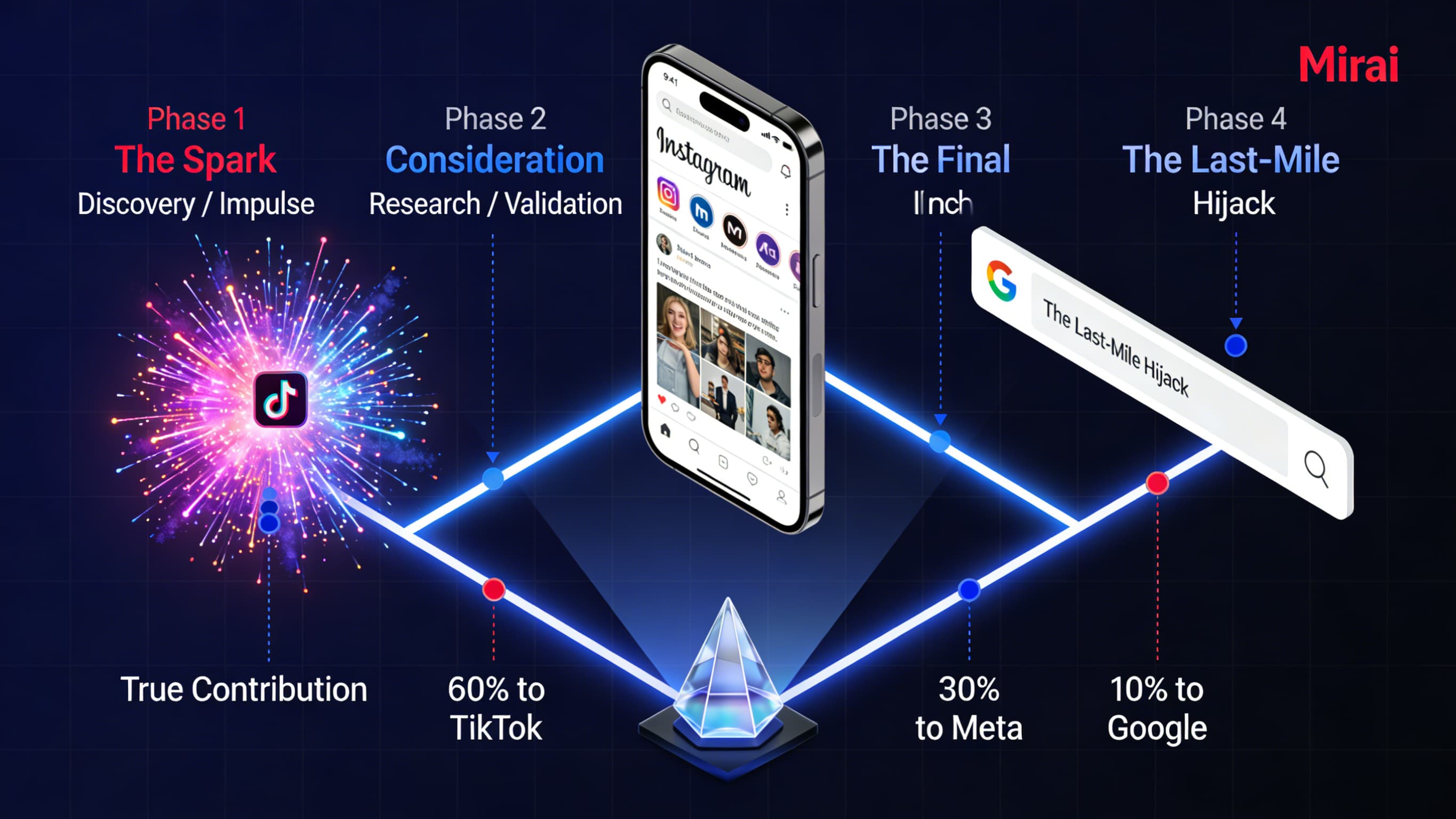
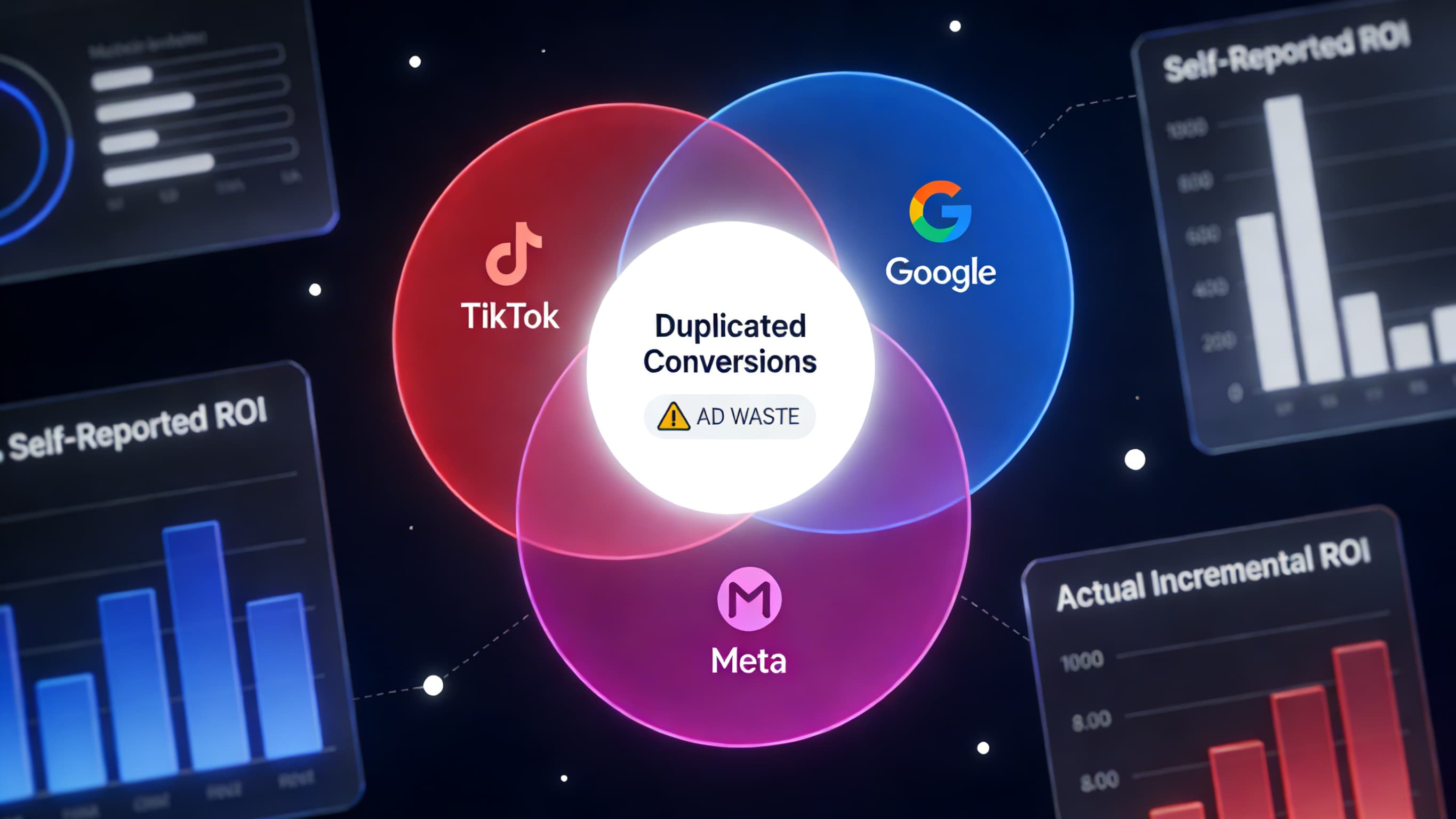
The fundamental conflict? Every platform reports that it was the sole driver of a sale. In reality, a user discovers a product on TikTok, researches it on Instagram, and finally buys it via a Google Search. Your bank account shows one sale; your dashboards show three.
2. The TikTok Shadow: Cannibalizing Organic Vitality
TikTok’s genius is its discovery engine. However, in 2026, its AI has become so efficient that it often prioritizes “low-incrementality” conversions.
TikTok’s ad algorithm identifies users who have already spent significant time watching your organic content. It then serves them a “paid” ad just as they are about to convert anyway. Through Mirai audits, we frequently discover that these users would have encountered your brand via the organic For You Page (FYP) within 24 hours regardless of the ad.
In essence, TikTok Ads are often charging you to buy back engagement that you already earned for free.
3. The Last-Mile Hijack: How Google and Meta Steal the Credit
While TikTok excels at sparking the “Fire,” Google and Meta are optimized to “Collect” the results at the final second. The moment a TikTok video sparks interest, the user shifts to search. This is where Google’s Brand Search ads perform the “Last-Mile Hijack.” They intercept the user at the point of purchase and claim 100% of the attribution credit, effectively erasing TikTok’s top-of-funnel influence from your reports.
This leads many marketers to the fatal conclusion that “Google is the most efficient,” leading them to cut budgets for “Discovery” engines like TikTok—a mistake that marks the beginning of brand decay.
4. How Mirai Redistributes “True Contribution”
Mirai resolves this cross-channel chaos by understanding the unique DNA of each medium and applying a unified, deduplicated attribution logic:
- Fair Attribution for TikTok: Mirai identifies the “Original Spark” even if it happened days before the final search, giving TikTok credit for demand creation.
- Optimizing Google/Meta: We identify which ads are merely “collecting the mail” versus which ones are actually “persuading the buyer,” allowing you to shift budget from low-incrementality brand search to high-growth acquisition.
- Total Deduplication: Instead of splitting one sale into three, Mirai calculates the fractional contribution (e.g., 0.5 for discovery, 0.3 for consideration, 0.2 for fulfillment).
5. Conclusion: Graduate from Self-Reported Dashboards
Marketing in 2026 is no longer about just “running ads.” It is about Data Governance. It’s about recognizing the DNA of each platform and policing the “attribution grab” that happens behind the scenes.
Mirai Track is the independent arbiter for the modern advertiser—a compass that points to true ROI amidst a storm of platform-biased data.
Ready to stop the attribution grab? Deploy Mirai Track today and see where your ad dollars are really going.